The wind feels cool, your attention is on the kite and hours on the water pass quickly. That makes it easy to underestimate the sun during a kitesurfing day. Water and pale sand can add reflected UV exposure, while cool wind does not mean a low UV Index.
A good plan starts before you leave: check the UV Index, estimate how long you will be outside and pack protection for both the session and the time spent waiting on shore.
Check more than the wind
Kitesurfers naturally follow wind direction and strength. Add the UV Index to the same forecast check. It describes ultraviolet radiation, not temperature. A bright, windy day may feel fresh while exposed skin still needs protection.
When practical, avoid putting the longest session in the strongest part of the day. While waiting for wind, use shade rather than sitting on an open beach simply because the air feels cool.
Choose technical clothing for the session
In-water kitesurfing needs clothing designed for the job: a wetsuit or technical UV top whose manufacturer clearly states that it is intended for water use. Fit, salt/chlorine resistance, seams and compatibility with a harness matter alongside UV information.
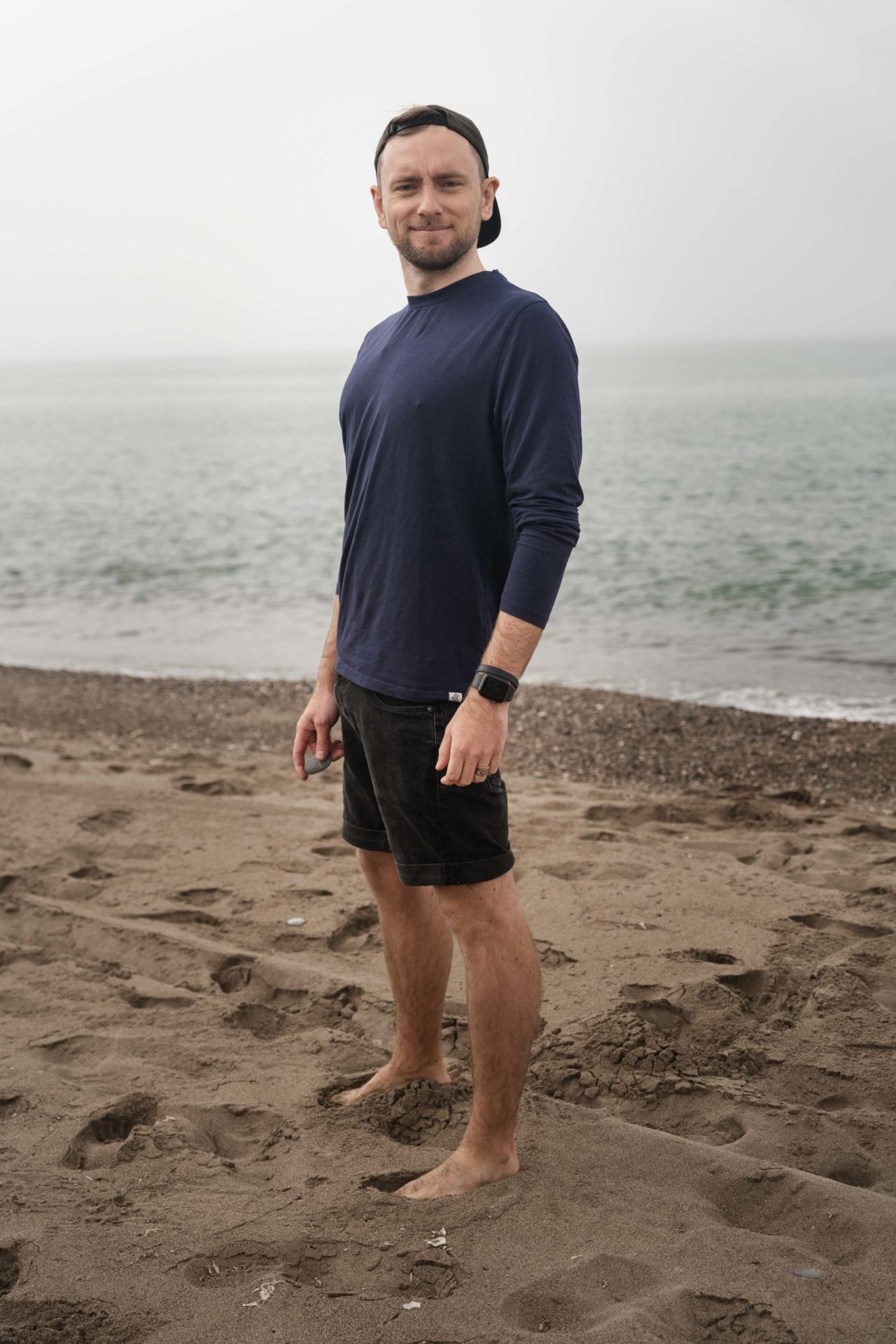
OakCrew cotton and bamboo-viscose long sleeves are not technical kitesurfing or swim tops. We do not have evidence for their performance when wet, so we position them for before and after a session or for time spent on shore.
Exposed skin still needs sunscreen
The face, ears, hands and any other uncovered areas remain exposed. Use a broad-spectrum sunscreen suitable for water sports, follow its directions and reapply as instructed, especially after time in the water or towel drying.
Remember the lips, back of the neck and feet—easy areas to miss when rigging in a hurry.
Eyes, hat and hydration
On the water, use eye protection designed and secured for the activity. On shore, keep a hat, sunglasses and a light covering layer nearby. Put your water bottle where you will see it when you return.
Kitesurfing day checklist
- wind forecast and UV Index;
- wetsuit or technical UV top for the session;
- sunscreen for exposed skin;
- activity-appropriate eye protection;
- hat and sunglasses for shore time;
- a dry long sleeve before and after the session;
- water, towel and dry clothes;
- shade or somewhere indoors to recover.
A soft layer after the session
After the water, it feels good to remove technical kit and change into something dry and relaxed. An OakCrew long sleeve can be that shore layer, covering shoulders and arms while you pack equipment, talk with friends or wait for the next wind window. That is its honest role—not a replacement for technical kitesurf clothing.